

Corratock
A Long-Term Vision for the Land
Stewarding and Protecting Open Space Across Generations and Ownership
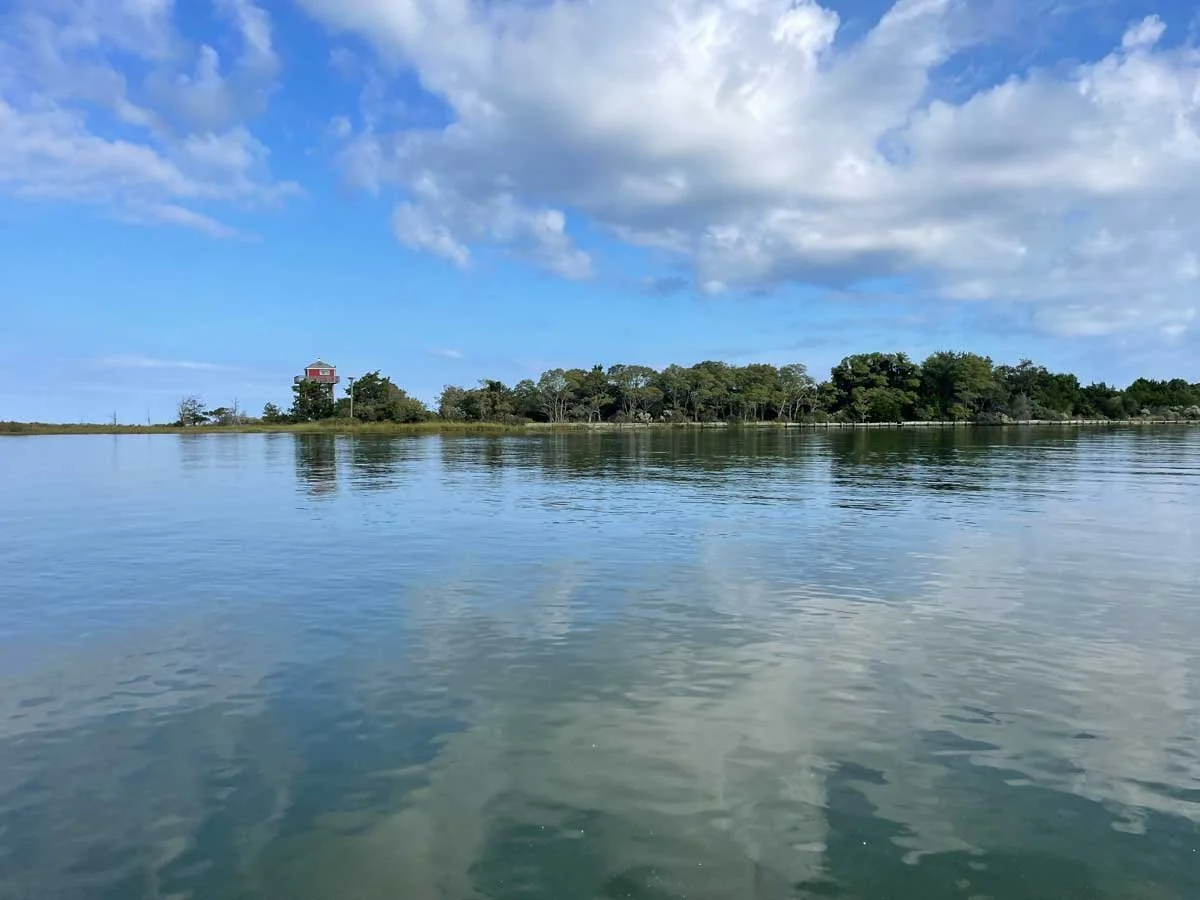
Corratock
Viewing Corratock from a boat on the Chesapeake Bay, you see a long stretch (about 2.5 miles) of sandy beach marked on the southern end by a tall red tower. The tower is a small, raised cabin that sits on the point of a peninsula between Back Creek and Craddock Creek. Behind the beach, there are extensive marshlands (more than 1,000 acres) as well as some open land, forest, and ponds managed for wildlife. “Looking across the marsh, you see all the way from Craddock Creek to houses on the north shore of Nandua Creek,” commented David Turner.
David Turner speaks softly and thoughtfully. He was born and raised on the Eastern Shore where he has been a wildlife sculptor for nearly 40 years. His favorite subjects are the diverse and numerous creatures native to this area.
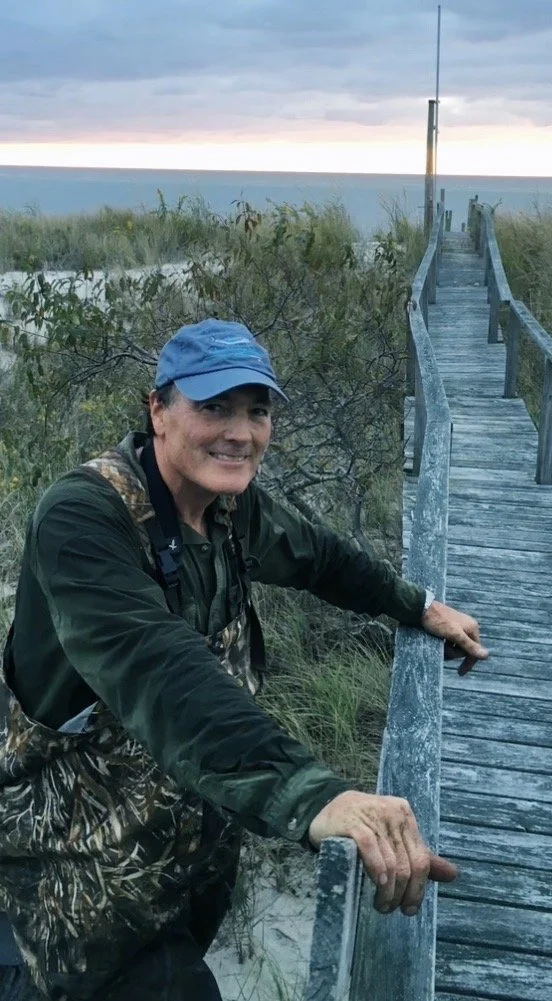
Local sculptor preserves wild island
“I see sculpture as a reflection of my love for nature. Seeing that expanse of marsh with wildlife like deer and eagles moving through that space always inspired me.”
- David Turner, easement donor
While Corratock is a wonderful place for both hunting and fishing, David and his family also enjoyed wildlife viewing and beach combing. David’s kids have happy memories of the property and spending the night in the beach cabin. “I have fond memories going duck or goose hunting in the morning and returning to the beach front cabin for breakfast where I could continue to watch wildlife from the observation tower. I was perfectly happy even if I didn’t get a shot,” said David.
David’s father, William Turner, always dreamed of Corratock. Dr. Turner visited the property with a cousin, who was the caretaker, in his early adulthood. However, the Turners’ connection to Corratock is much older. They can trace their ancestors to Corratock and the surrounding area to the 1700s. A neighboring property, known as Hyslop, was passed down from David’s grandmother to his brother.
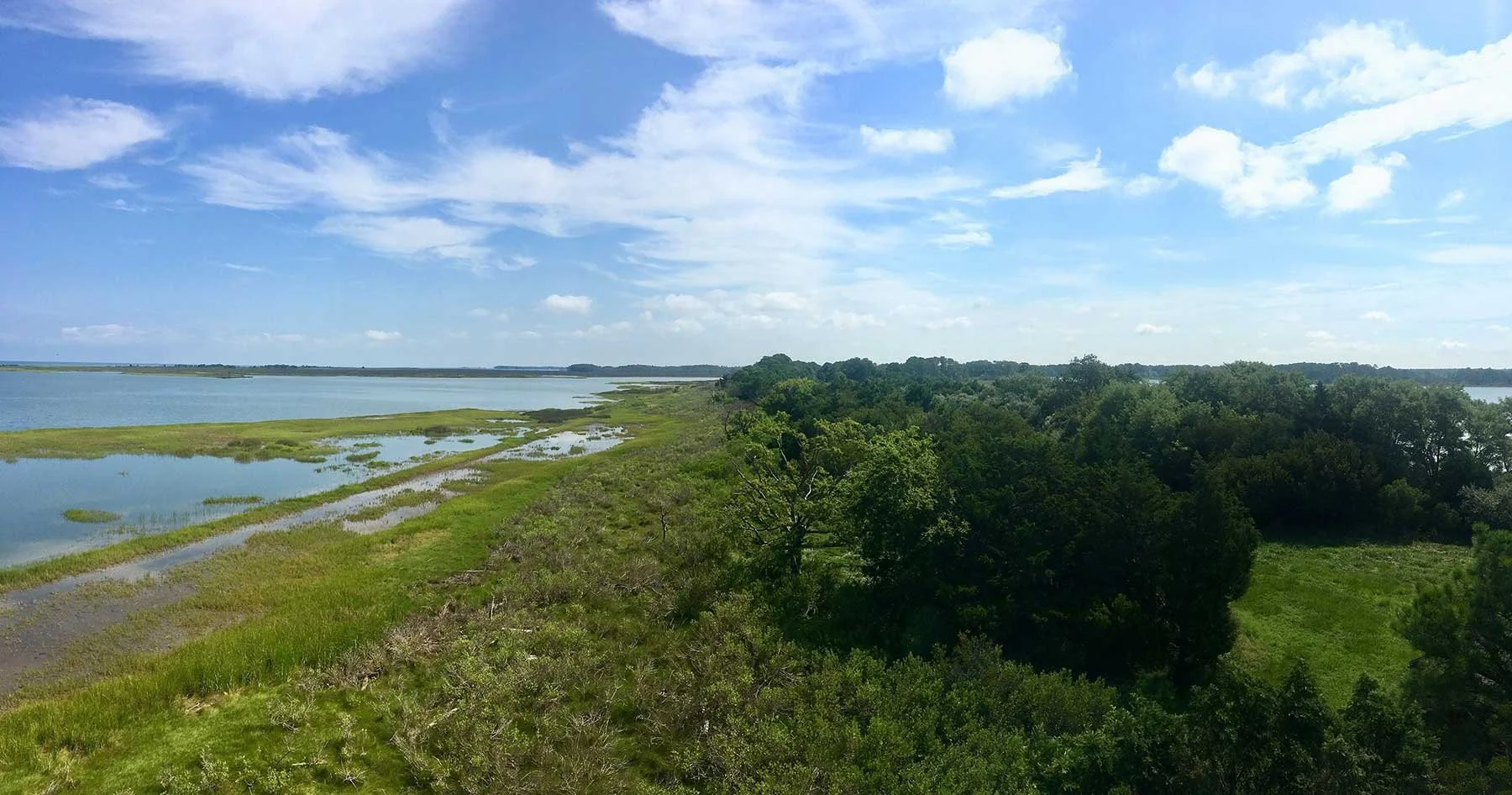
Corratock view from the tower
David and his immediate family owned the property for 25 years; and in that time added to the legacy and stewardship of Corratock. The property was farmed and primarily produced soybeans. The deer significantly impacted the harvest. So, the Turners transitioned to native grasses, clover, and other plants and habitat for wildlife. This improved the property for hunting, but also created a wildlife sanctuary. “We planned to keep the property as open space and we wanted to protect that open space perpetually,” said David. So, David and his father donated a conservation easement on Corratock in 2009.
“While we weren’t planning on selling the property at that time, we considered that things change over time and property changes hands. A conservation easement protects the conservation benefits of the land when the property transfers to new ownership. I feel at ease knowing now that the property is owned by someone new, the conservation easement will preserve the land undeveloped and as open space,” he added. Successive landowners retain the right to private ownership and use of the property as long as their use fits the conservation benefits protected by the easement.
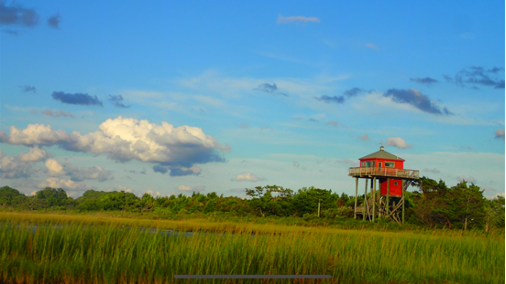
Corratock
Undeveloped, the property will continue to provide a sanctuary for wildlife and protect the waterways we work and play on. “The bigger picture that I see is everything runs down stream. The less developed the land is, the less impact on and pollution in the creeks and bays. Clean water is good for us and wildlife,” said David.
David believes everyone can do something to enhance the Shore and protect the natural resources we are so lucky to enjoy. From picking up trash to conserving land, there’s a way we can all contribute. For David and his family, it was conserving Corratock for wildlife, water quality, and the next generation of land stewards. “I’m lucky to have had 25 years of use of the property. And now I have peace of mind that it’s protected,” said David. “Even though the property is under new ownership, I still feel like a steward because of the vision we put in place with the conservation easement.”
David and his family have protected 1,521 acres over three properties on the Shore with VES Land Trust. David serves on the VES Land Trust Board of Directors. His studio, foundry and gallery are all located at Turner Sculpture. He received the Ward Museum Living Legend Award in 2018.