
by Arthur Upshur
I am often asked how farmers are managing farmland on our conserved properties. In the Land Trust, we have more landowners renting out their land to farmers than we have farmer landowners. Frequently our easement landowners have limited experience with or exposure to modern farming. Most landowners are trying to be good stewards of the land and many worry that modern farming practices may not be good for wildlife and the conservation values they want to see on their farms. This article is intended to be an introduction to managing your land with a conservation partner farmer.
Practice open communication, specify responsibilities
Make sure you have good communication with your farmer. Buy them a coffee or lunch. Better still, visit your land with them. Have a written farming agreement. There are no set rules for what is in a farming agreement and most on the Shore are handshakes. But a written agreement, particularly in the beginning of a relationship is a good business practice. It sets down what the landowner cares about and enables the farmer to adapt their practices to accommodate landowner priorities. It allows both parties to compromise and propose ideas that work for the farmer’s business and addresses the landowner's concerns.
For example, how close should the farmer plant to the road into the property? Some landowners want a property entrance lined with trees and a buffer on each side of the road. Typically, the landowner will be responsible for mowing and maintenance and may request the farmer keep large equipment off the road. If the farmer uses the road for equipment, the landowner may ask them to help with maintenance and mowing. Or a landowner may request the farmer plant close to the road so no mowing is needed.
Similarly on ditches and roadsides, should the farmer plant as close as possible to the edges or should they leave a buffer strip to limit pesticides and herbicides in ditches? Many ditches are really sculpted stream beds that drain quickly into the Chesapeake Bay or seaside waterways. Preventing crop fertilizers and pesticide applications from entering those waterways is an important conservation goal. But maintaining ditches, clearing out trees and shrubs that establish without regular maintenance, is time consuming and costly. Who is doing that work or paying for it to be done? Many farmers will tell you that cutting grass is their most expensive task; and buffers require a lot of mowing.
Typically, farmers want good access to the field. But who maintains field roads and trims the edges to keep the woods from encroaching into the field? Most farmers probably prefer to clear edges high enough they can safely operate equipment without hitting limbs or low hanging branches. They might use vertical blade cutters, bulldozers, or excavators to remove trees and limbs. While more efficient, these tools usually leave the field edge with roughly cut branches or a bramble that might not match the landowner's goals. It’s best to talk these things through ahead of time and decide who will be responsible. If it’s the landowner, do they clearly know what the farmer requires and when the work needs to be done?
Set realistic rental rates that reflect the services provided
Rental rates for farms vary widely on the Eastern Shore. If the land is well suited to growing higher value crops or for growing more efficiently, it usually warrants a higher rent. Infrastructure for irrigation, high quality soil, and the shape, size, and accessibility for larger equipment are all part of the rental equation. Smaller tracts that require more transport time and less field time reduce rates. Land less suited to farming that has uneven terrain or is subject to more frequent flooding or drought conditions is worth less. The agricultural extension offices in both counties can help evaluate the value of your land to start a rental rate conversation with your farmer.
The expectations on the farmer are also a key variable. If they have to mow a buffer strip along a road, driveway, or ditch, then they will pay less rent to compensate for that service. Buffers and setbacks also reduce the land in production and therefore the acres rented. Lower rentals are also connected to other services the farmer provides. Planting wildlife game food plots, pollinator meadows, and maintaining farm roads all may match up with lower rental rates. If you are an absentee landowner and depend on your farmer to keep an eye on your place, clear up storm damage, etc., then you probably will be willing to have lower farm rent in return for the extra time and attention.
Restrictions on common farm practices may also impact rates. On my farm, I am uncomfortable with aerial application of pesticides because I worry about drift onto portions of my farm that are organic. I have also asked certain herbicides that are likely to drift not be used. I recognize by taking tools away from my farmer, I have to accept a slightly lower rent. Spraying mature crops by driving the sprayer over the crop rather than applying by plane or helicopter reduces yield. Eliminating herbicide options may enable herbicide resistant weeds to emerge more quickly. Each time you prohibit a practice or restrict the farmer’s flexibility, it impacts their profitability. That said, you are the owner and you determine what practices you accept.
Requiring notice before spraying dangerous chemicals may seem reasonable. But farmers often make spraying decisions at the last minute based on wind conditions and weather forecasts. They seldom can give definitive advance notice. And in the middle of a short work window, making phone calls to owners is a delay. As the owner, you have to balance things that would be nice to have against the farm business impact. For example, chicken manure is a cheap and effective fertilizer. Unfortunately, it’s pretty stinky and dusty. But the smell is only for a few days. Is it a problem important enough to limit?
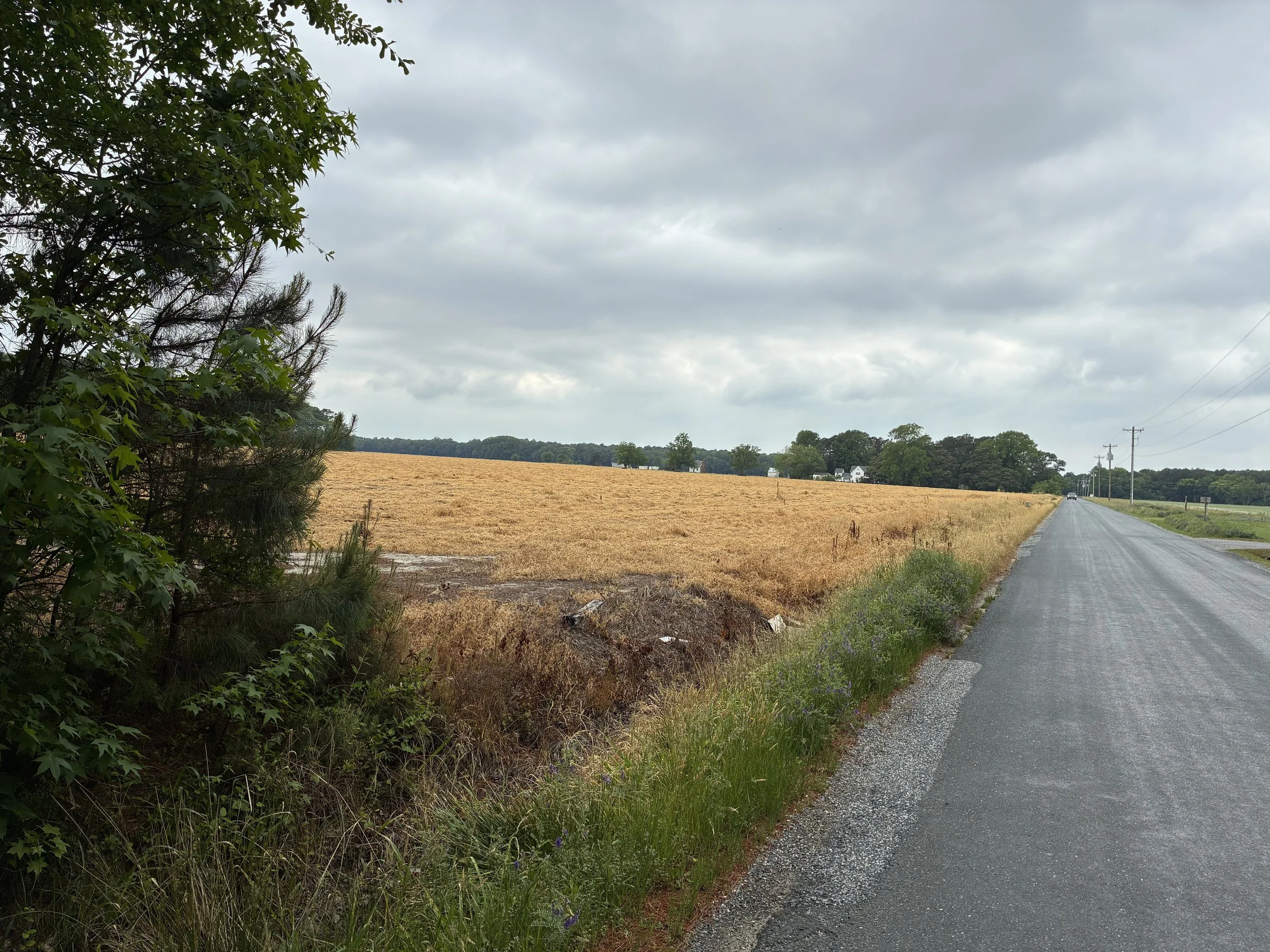
Showing herbicide overspray in the ditch between field edge and roadside.
Coordinate between farmers, hunters, and others using the land
It is important you stay in touch and coordinate with your farmer, hunter, and anyone using the land. If you have a hunter, make sure the farmer and your hunter know how to work together. If the hunter uses the roads during the winter, perhaps they can pick up some of the maintenance costs. If deer damage is a problem, perhaps the farmer can work with the hunter to increase deer harvest. If a timber harvest is planned, the farmer may need to adjust his planting area to insure timber access without damaging crops. If a controlled burn is planned, you may need to adjust timing or have a larger fire break to protect vulnerable crops like wheat. If you are planning a wedding at the farm, let your farmer know so they can adjust accordingly.
Cultivate a long-term relationship, review the agreement every five years
I usually recommend reviewing the rental agreement at least every five years. And remember that changing farmers is often a multi-year project. There are laws to protect your removing rental land from farmers after they have committed to seed and supplies for the upcoming season. You need to notify the farmer before September 1st to change farmers the next growing season. Of course, the best landowner and farmer relationships are long term. You want your farmer to value your land as you do. And your farmer is a key partner in being an effective steward of your land.